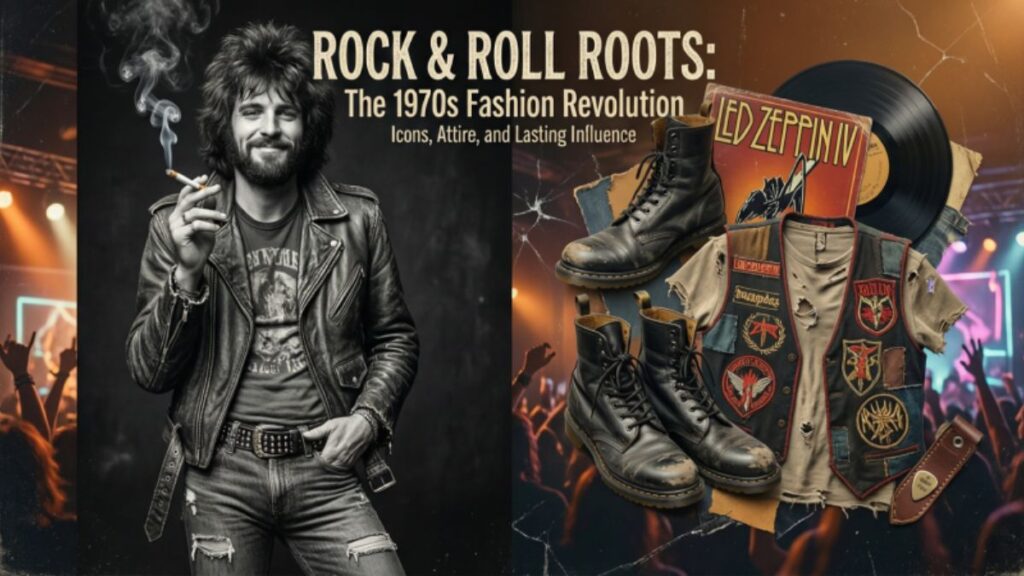
The 1970s were loud, rebellious, and unapologetically expressive. Music was changing fast, and so was the way musicians dressed. Clothing became more than fabric; it turned into a statement of freedom, attitude, and raw emotion. From smoky concert halls to underground clubs, a bold style emerged that refused to follow rules. This era didn’t just influence musicians, it reshaped street style, runway fashion, and youth culture around the world. What made this look so powerful was its honesty. It wasn’t polished or perfect, but real, gritty, and fearless. To understand why it still matters today, we need to dive deep into the soul of 1970’s rocker fashion and what made it timeless.
The Cultural Roots of Rocker Style in the 1970s
The rise of this fashion movement cannot be separated from the social changes of the decade. The 1970s were marked by political unrest, anti-war protests, and a growing desire for individuality. Rock music became the voice of rebellion, and clothing reflected that mindset. Artists dressed to shock, to express anger, freedom, and personal identity rather than to impress traditional society. Denim, leather, and worn-out fabrics symbolized resistance against polished mainstream culture. The look borrowed from biker culture, glam rock theatrics, and blues musicians, blending them into something raw and unforgettable. This style wasn’t designed in studios; it evolved naturally from the streets, stages, and shared experiences of a generation searching for its voice.
Iconic Musicians Who Shaped the Look
Legendary musicians played a huge role in defining what people now recognize as classic rocker style. Artists like David Bowie, Mick Jagger, Joan Jett, and Jimmy Page didn’t just perform music; they created visual identities that fans wanted to copy. Their outfits told stories before a single note was played. Tight trousers, open shirts, platform boots, and dramatic accessories became part of their signature looks. These performers understood the power of image and used clothing to amplify their stage presence. What made their influence lasting was authenticity. They didn’t wear costumes; they wore expressions of who they were. That honesty is why their style still inspires designers and musicians decades later.
Signature Clothing Pieces That Defined the Era
Certain garments became symbols of rebellion and rock culture during this time. Leather jackets represented toughness and independence, while flared jeans added movement and drama. Band tees were more than merchandise; they were badges of loyalty and identity. Scarves, studs, and bold patterns added personality without following fashion rules. Unlike earlier decades, there was no single “correct” way to dress. Mixing textures, colors, and influences was encouraged. The beauty of this era’s fashion was its flexibility. Whether someone leaned toward glam, hard rock, or punk influences, the core idea remained the same: wear what feels powerful and true. That mindset is a major reason 1970’s rocker fashion still feels relevant today.
Hair, Makeup, and Accessories as Statements
Style in the 1970s went far beyond clothing. Hair and makeup were just as important in creating the full rocker image. Long, wild hair symbolized freedom and rejection of conservative norms, while heavy eyeliner added intensity and mystery. Accessories like chunky rings, layered necklaces, and wide belts helped personalize each look. These elements weren’t about beauty standards; they were about attitude. Men and women alike experimented with appearance, blurring traditional gender lines. This fearless approach to self-expression helped shape modern ideas of unisex fashion and creative freedom. Even today, many artists use similar techniques to create bold, unforgettable visual identities.
The Influence on Modern Fashion and Pop Culture
The impact of this era didn’t fade when the decade ended. Designers continue to revisit and reinterpret its elements on global runways. Modern streetwear, festival outfits, and even high-fashion collections often borrow from the rebellious spirit of the 1970s. What keeps this style alive is its emotional connection. It represents courage, creativity, and nonconformity, values that never go out of style. Movies, music videos, and social media constantly revive these aesthetics, introducing them to new generations. While trends change, the core attitude remains powerful. That is why 1970’s rocker fashion continues to influence how people dress, perform, and express themselves today.
Why This Style Still Resonates Today
At its heart, this fashion movement is about more than clothing. It’s about identity and freedom. In a world that often pushes conformity, the rocker look reminds people that it’s okay to stand out. It encourages confidence, individuality, and emotional honesty. Modern audiences connect with this message just as strongly as people did decades ago. Whether someone adopts the full look or just subtle elements, they’re tapping into a legacy of fearless self-expression. The style’s durability proves that authenticity never goes out of trend. That lasting emotional power is what truly defines 1970’s rocker fashion and keeps it alive across generations.
Conclusion
The fashion of 1970s rock culture was never about perfection or approval. It was about energy, rebellion, and telling the world who you are without saying a word. Born from social change and musical revolution, this style became a visual language of freedom. Its influence on music, fashion, and culture is undeniable, and its relevance continues to grow. By embracing individuality and rejecting limits, it created a legacy that still inspires artists and everyday people alike. The story of 1970’s rocker fashion is ultimately a story about courage, creativity, and the power of being unapologetically yourself.
FAQS
What is 1970’s rocker fashion?
It is a bold style inspired by rock musicians of the 1970s, known for leather, denim, expressive accessories, and rebellious attitude.
Why was rocker fashion important in the 1970s?
It reflected social rebellion, individuality, and the changing cultural values of youth during that decade.
Which musicians influenced this fashion the most?
Artists like David Bowie, Mick Jagger, Joan Jett, and Jimmy Page played major roles in shaping the look.
Is this fashion style still popular today?
Yes, many modern designers and musicians continue to draw inspiration from its bold and expressive elements.
Can modern outfits include rocker fashion elements?
Absolutely, even subtle touches like leather jackets or band tees can reflect the spirit of the style.