
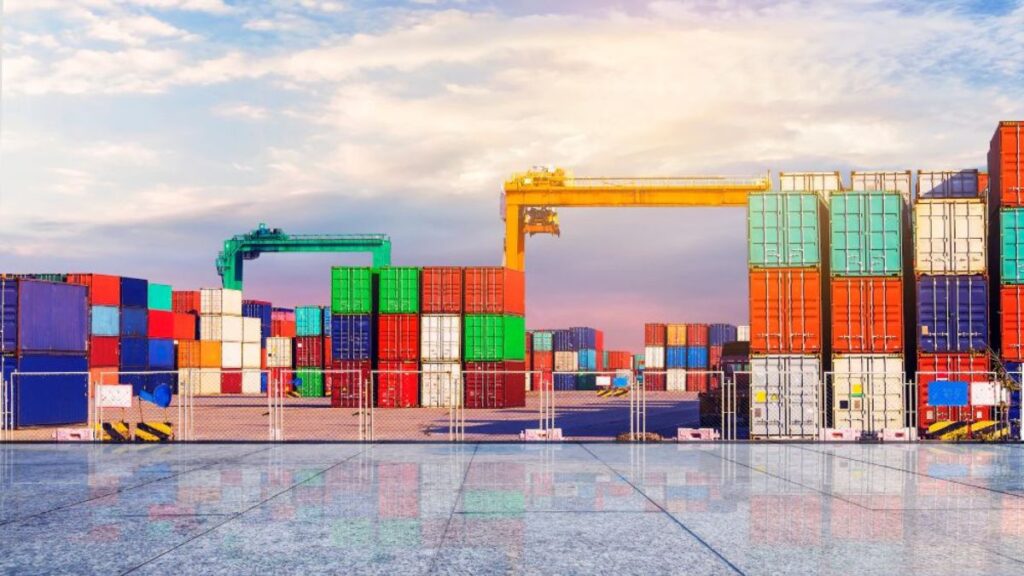
A private freight terminal plays a vital role in modern logistics by offering dedicated space, equipment, and processes for receiving, handling, and dispatching cargo owned by a single company or a tightly controlled group. Unlike public terminals, which serve many carriers and shippers, a private freight terminal is tailored to a specific business’s operational rhythms, volume, and security needs.
This guide explains what a private freight terminal is, why businesses choose them, how they are organized, the advantages and trade-offs, and practical considerations for planning, building, or outsourcing such a facility. The explanation uses clear, everyday language so readers unfamiliar with logistics can understand the core concepts and real-world implications.
What is a private freight terminal?
A private freight terminal is a dedicated facility where a single company or a closely affiliated group manages inbound and outbound freight. It can be located at a company’s manufacturing site, warehouse campus, or at a nearport or rail siding.
The key characteristic is exclusivity: the facility’s layout, staffing, security, and processes are optimized to serve one owner’s shipping and receiving patterns rather than serving general commercial traffic. This specialized setup reduces wait times, improves cargo security, and enables tighter control over inventory and documentation.
How private freight terminals differ from public terminals
Private freight terminals differ in focus and function. Public terminals handle freight from multiple shippers and carriers, offering flexibility to many customers but often facing congestion and variable service levels.
A private terminal eliminates those variables by providing reserved equipment, lanes, and staff, and by aligning hours and systems with the owner’s supply chain. Private terminals may be connected directly to a company’s enterprise resource planning systems, allowing automated checks, real-time inventory reconciliation, and faster turnaround.
Common uses and industries
Private freight terminals are used by manufacturers and retailers with large, regular volumes of inbound raw materials and outbound finished goods. Automotive manufacturers often rely on private rail spurs and terminals to move parts and vehicles with predictable schedules.
Large retailers and e-commerce companies use private terminals at regional distribution hubs to coordinate high-frequency deliveries, staging, and cross-docking. Specialty industries such as chemicals, pharmaceuticals, and cold-chain food distribution use private terminals to enforce strict handling, temperature control, and compliance procedures.
Core components and layout
A private freight terminal is more than just a fenced yard. Its layout typically includes dedicated receiving and dispatch docks, container or trailer parking, customs and inspection zones if needed, secure storage yards, maintenance areas for equipment, and offices for operations and logistics teams.
Technology components often include gate automation, weighbridges, yard management systems, and integrated warehouse management software. Security measures such as controlled access gates, CCTV, and tamper-evident seals are standard for businesses handling valuable or sensitive cargo.
Operational advantages
Operating a private freight terminal delivers several tangible advantages. Turnaround times shrink because trucks and trains do not queue behind unrelated traffic. Predictable handling results come from trained staff who are familiar with the owner’s product types and procedures, which lowers damage rates and improves documentation accuracy.
Operational flexibility allows the owner to stage loads precisely for peak demand, hold safety stock closer to critical production lines, and enforce company-specific safety and compliance standards without compromise. Financially, companies that can fill and use private terminal capacity effectively may reduce per-unit logistics costs and avoid demurrage charges common in congested public facilities.
Trade-offs and limitations
A private freight terminal requires capital investment, ongoing operating costs, and experienced management. For businesses with variable or modest volumes, the fixed costs of a private terminal can outweigh the benefits. Land availability and local zoning rules may limit expansion or operational hours.
Running a private terminal also means the owner assumes responsibility for compliance, customs facilitation where applicable, and the full cost of equipment such as cranes, forklifts, and plug-in points for refrigerated trailers. Companies must weigh these trade-offs against reliability and strategic control.
Planning and implementation checklist
- Confirm throughput and volume forecasts to justify facility size and equipment. Accurate forecasting determines gate capacity, yard area, and dock numbers.
- Evaluate location options based on proximity to suppliers, customers, ports, and major highways or rail lines. Location drives transport costs and environmental considerations.
- Design the yard layout to minimize internal travel time for vehicles and equipment, with separate lanes for inbound and outbound traffic to avoid cross-flows.
- Select technology and integration plans, including gate automation, WMS/YMS, EDI feeds, and security systems to enable data-driven operations.
- Plan for regulatory compliance including customs, hazardous materials handling, and environmental permits if the terminal will handle regulated goods.
- Build staffing, training, and safety programs tailored to the cargo types and expected rhythms of the terminal.
Table: Typical private freight terminal capacity and features comparison
| Feature | Small Private Terminal | Mid-size Private Terminal | Large Private Terminal |
| Annual TEU or trailer throughput | 10,000–30,000 | 30,000–150,000 | 150,000+ |
| Number of dock doors | 4–10 | 10–30 | 30+ |
| Yard storage (trailers/containers) | 50–200 | 200–800 | 800+ |
| On-site equipment | Forklifts, small yard truck | Reach stacker, yard tractor | Cranes, multiple reach stackers |
| Automation level | Basic gate and WMS | Gate automation, YMS integration | Full automation, advanced telematics |
| Typical users | Regional manufacturers | Large retailers, distributors | Automotive, global manufacturers |
People and technology: building the right mix
Successful private freight terminals blend human expertise with technology. Experienced terminal managers set workflows and exceptions, while operators and drivers execute with precision. The technology layer, including real-time tracking and analytics, enables greater visibility and continuous improvement.
Machine learning can predict yard congestion and suggest dispatch windows, while mobile apps guide drivers to open docks and capture proof of delivery. However, technology cannot replace relationships: good collaboration with carriers, customs agents, and nearby authorities is essential to smooth operations.
Cost and ROI considerations
Investing in a private freight terminal can be justified by analyzing total landed cost reductions, improved inventory turns, and avoided external charges such as demurrage and detention. ROI calculations should include construction or lease costs, equipment procurement, staffing and training, and ongoing maintenance.
Benefits are measured in faster throughput, reduced stockouts, lower damage claims, and fewer delays. Businesses should model scenarios with sensitivity to volume fluctuations and consider phased investments that scale equipment and automation as throughput grows.
Environmental and community impact
A private freight terminal can be designed to minimize environmental impact through electrified handling equipment, solar power for on-site energy, water runoff controls, and efficient traffic planning to reduce idling.
Good community relations are important because terminals can increase truck traffic in neighboring areas. Companies should proactively engage with local stakeholders and implement noise reduction strategies, scheduled truck arrivals, and routing plans that limit neighborhood disruption.
When to outsource instead of building
Not every company benefits from owning a private freight terminal. Outsourcing to a dedicated contract logistics provider or leasing dedicated space within a public terminal can provide many advantages of a private facility without full capital exposure.
Outsourcing is especially attractive when volumes are uncertain, market conditions are volatile, or a rapid market entry is required. A hybrid approach, where a company leases a private-dedicated area inside a larger public terminal, can also deliver control with reduced capital burden.
Future trends affecting private freight terminals
Private terminals will continue to evolve with trends such as electrification of yard equipment, increased use of automation and robotics for sorting and loading, digital twins that simulate yard flows, and greater emphasis on sustainability and emissions reporting.
Intermodal integration will grow, with private terminals acting as hubs that connect road, rail, and short-sea shipping. Additionally, geopolitical shifts and nearshoring trends may increase the strategic value of private terminals as companies seek supply chain resilience.
Practical example: how a retailer benefits
Consider a regional retailer managing seasonal peaks. With a private freight terminal, the retailer can pre-stage high-demand stock close to urban centers, run evening receiving and cross-dock operations to shift inventory rapidly to stores, and enforce strict quality checks on incoming shipments.
This results in higher in-stock rates, fewer rush shipments from distant suppliers, and lower emergency freight costs. The retailer gains predictability and control, which translates into customer satisfaction and cost savings.
Conclusion
A private freight terminal is a strategic asset for organizations with consistent and substantial freight needs. It provides faster turnaround, tighter security, and operational flexibility that public terminals cannot always match.
The decision to build, lease, or outsource such a terminal depends on volume forecasts, capital availability, and strategic priorities such as speed to market and supply chain resilience. When planned carefully—attending to location, layout, technology, and community impact—a private freight terminal can deliver measurable improvements in cost, service, and control.
Five unique short FAQs
What is a private freight terminal?
A private freight terminal is a dedicated facility controlled by a single company or a small group, designed to receive, store, and dispatch that owner’s cargo with tailored processes, equipment, and security for improved turnaround and control.
How does a private freight terminal reduce costs?
A private freight terminal reduces costs by lowering demurrage and detention risks, minimizing handling damage, enabling better inventory planning, and reducing external congestion-related charges through predictable, owner-directed operations.
Who typically uses private freight terminals?
Large manufacturers, automotive companies, major retailers, e-commerce distributors, and industries with specialized handling needs such as cold chain or hazardous materials commonly use private freight terminals.
How do private freight terminals improve security and compliance?
Because they are owner-controlled, private terminals can implement strict access control, CCTV, sealed containers, customized inspection points, and integrated documentation systems that make compliance with customs and industry regulations simpler and more reliable.
What factors should be evaluated before building one?
Before building a private freight terminal, evaluate throughput forecasts, location and access to transport modes, capital and operating costs, regulatory and environmental permits, required technology integration, and the potential need to scale or adjust capacity over time.