
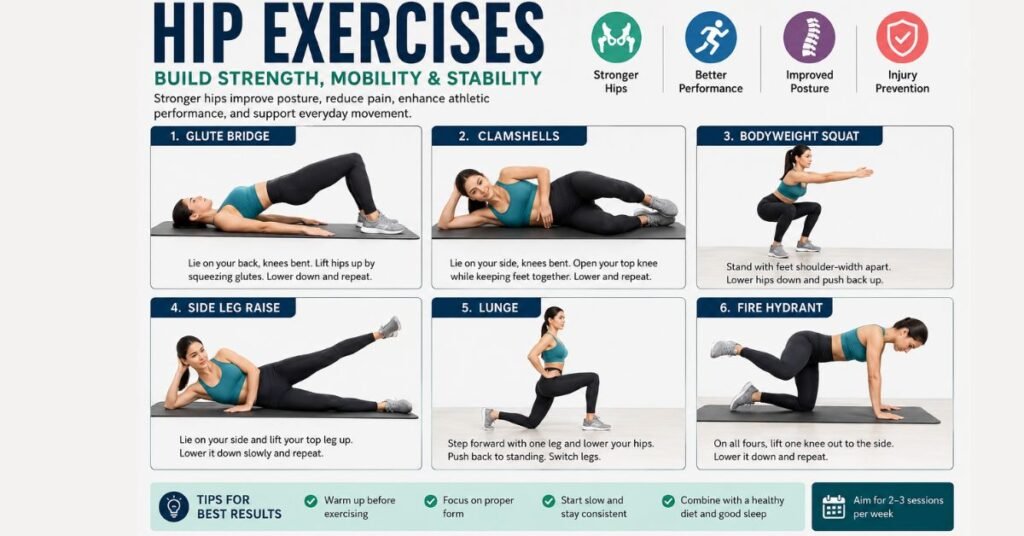
Strong and flexible hips are essential for almost every movement you make, from walking and climbing stairs to running and lifting weights. Unfortunately, long hours of sitting, poor posture, and inactivity can weaken the muscles around the hips, leading to stiffness, discomfort, and reduced mobility. Adding Hip Exercises to your fitness routine is one of the simplest ways to improve your overall movement, prevent injuries, and support better posture.
Whether you’re an athlete, a fitness beginner, or someone looking to stay active as you age, focusing on hip strength can make everyday activities easier and more comfortable. This guide explains why healthy hips matter, the muscles involved, the best exercises to include, and practical tips to maximise your results.
Why Healthy Hips Matter
Your hips serve as the body’s central connection between the upper and lower body. They absorb impact, transfer force, and provide balance during movement. When the muscles around the hips become weak or tight, the knees and lower back often compensate, increasing the risk of pain and injury.
Strong hips help improve balance, walking mechanics, athletic performance, and joint stability. They also reduce stress on surrounding muscles and joints, making daily movements smoother and more efficient.
Understanding the Hip Muscles
Several important muscle groups work together to keep your hips stable and mobile.
Gluteal Muscles
The gluteus maximus, medius, and minimus are responsible for extending, rotating, and stabilising the hip. Strong glutes improve posture and power during movement.
Hip Flexors
Located at the front of the hips, these muscles help lift the knees and bend the waist. Tight hip flexors are common among people who sit for extended periods.
Hip Adductors
These muscles run along the inner thighs and help bring the legs together while supporting balance.
Hip Abductors
Found on the outer hips, these muscles move the legs away from the body’s centre and provide stability during walking and running.
Benefits of Hip Exercises
Regular Hip Exercises provide far more than stronger muscles. They improve overall body function and reduce discomfort caused by inactivity.
Some of the biggest advantages include:
- Improved flexibility and range of motion
- Better balance and coordination
- Reduced lower back discomfort
- Increased athletic performance
- Greater joint stability
- Enhanced posture
- Lower risk of injuries
Over time, stronger hips also make everyday tasks such as bending, standing, and climbing stairs much easier.
Best Exercises for Stronger Hips
Glute Bridges
Lie on your back with knees bent and feet flat on the floor. Push through your heels while lifting your hips until your body forms a straight line from shoulders to knees. Slowly lower and repeat.
This exercise strengthens the glutes, hamstrings, and core while improving pelvic stability.
Clamshells
Lie on one side with knees bent. Keeping your feet together, raise your top knee without rotating your hips.
Clamshells activate the hip abductors and improve side-to-side stability.
Bodyweight Squats
Stand with feet shoulder-width apart. Lower your hips by bending your knees while keeping your chest upright. Return to standing.
Squats strengthen multiple lower-body muscles while improving hip mobility.
Side Leg Raises
Lie on one side and lift the upper leg slowly without tilting the pelvis.
This movement strengthens the outer hips and supports better walking mechanics.
Lunges
Step forward with one leg and lower your body until both knees form roughly 90-degree angles. Push back to the starting position.
Lunges improve balance, coordination, and lower-body strength.
Fire Hydrants
Start on hands and knees. Lift one knee sideways while keeping your back flat and core engaged.
This exercise targets the gluteus medius, which plays a major role in hip stability.
Stretching for Better Mobility
Strength alone isn’t enough. Flexible muscles help your hips move naturally and reduce stiffness.
Figure Four Stretch
Lie on your back and place one ankle over the opposite knee. Gently pull the supporting leg towards your chest.
Kneeling Hip Flexor Stretch
Kneel with one foot forward. Shift your weight gently until you feel a stretch in the front of the rear hip.
Butterfly Stretch
Sit with the soles of your feet together and gently press your knees towards the floor.
Perform stretches after workouts or during recovery sessions for the best results.
Common Mistakes to Avoid
Many people perform exercises with poor technique, limiting results and increasing injury risk.
Common mistakes include:
- Rushing through repetitions
- Ignoring proper posture
- Using excessive resistance too early
- Forgetting to warm up
- Skipping recovery days
- Holding your breath during movement
Controlled movements with proper form always produce better long-term outcomes.
Creating an Effective Routine
A balanced weekly programme doesn’t need to be complicated. Aim to train your hips two to three times each week alongside other strength exercises.
A simple routine could include:
- Glute Bridges
- Bodyweight Squats
- Clamshells
- Lunges
- Side Leg Raises
- Fire Hydrants
Complete two or three sets of each exercise while gradually increasing repetitions as strength improves.
Who Should Perform Hip Training?
Almost everyone benefits from stronger hips.
People who may gain the most include:
- Office workers who sit for long periods
- Runners and cyclists
- Older adults wanting better balance
- Athletes seeking improved performance
- Individuals recovering from minor injuries under professional guidance
- Fitness beginners building foundational strength
Adding Hip Exercises consistently helps maintain mobility at every stage of life.
Nutrition for Muscle Recovery
Exercise alone cannot produce optimal results without proper nutrition.
Support muscle recovery by eating:
- Lean proteins
- Whole grains
- Fresh fruits
- Colourful vegetables
- Healthy fats
- Plenty of water
Adequate sleep also plays a vital role in muscle repair and long-term progress.
Tracking Your Progress
Consistency produces lasting improvements. Keep a simple journal or use a fitness app to record workouts, repetitions, flexibility improvements, and any reduction in discomfort.
Taking progress photos or noting improvements in balance and mobility can help maintain motivation over time.
Conclusion
Healthy hips are essential for strength, balance, mobility, and overall quality of life. By performing Hip Exercises regularly with proper technique, you can improve posture, reduce stiffness, and support better movement in both everyday activities and sports. Combine strengthening movements with stretching, good nutrition, and consistent practice to achieve lasting results. Small improvements each week can lead to significant gains in mobility and comfort over time.
FAQs
What are the best Hip Exercises for beginners?
Beginners should start with glute bridges, clamshells, bodyweight squats, side leg raises, and gentle stretching to build strength safely.
How often should I train my hips?
Most people benefit from two to three sessions per week, allowing adequate recovery between workouts.
Can stronger hips reduce lower back pain?
Yes. Improved hip strength often reduces strain on the lower back by improving posture and movement mechanics.
Do I need equipment?
No. Most beginner routines use only body weight, although resistance bands can increase difficulty later.
How long does it take to notice results?
With regular practice and proper nutrition, many people begin noticing improvements in strength, balance, and flexibility within four to eight weeks.