Deciding what to eat in Hanoi starts with three dishes: phở, bún chả and chả cá Lã Vọng. Add bánh cuốn for breakfast, a bowl of bún thang and a cup of egg coffee, and the essentials of Hanoi food are covered. Below are 15 Hanoi dishes and drinks, with their origins where known, and where current sources, led by the 2026 Michelin Guide, say to try them.
What sets Hanoi food apart
Vietnam’s national tourism authority describes northern cooking as mild and built around the natural taste of its ingredients, with herbs and condiments on the side. Some of the best food in Hanoi comes from specialists, and the tourism authority notes that many stalls serve just two or three dishes. Plan the sights around your meals with this guide to things to do in Hanoi.
Noodle soups
1. Phở (beef and chicken)
Phở is rice noodles in a clear broth, topped with beef (phở bò) or chicken (phở gà); for beef phở, bones simmer for hours with star anise, cinnamon, ginger and black cardamom. The dish took shape in northern Vietnam in the early 20th century, and whether beef phở was born in Hanoi or in nearby Nam Định is still debated. Chicken phở, which appeared in 1939, is considered a hallmark of Hanoi cooking. Taste the broth first, then season beef phở with garlic vinegar and chicken phở with lime, and add quẩy, fried dough sticks, for dipping.
Where to try it: The 2026 Michelin Guide gives a Bib Gourmand, its award for good value cooking, to Phở Gia Truyền at 49 Bát Đàn and Phở 10 Lý Quốc Sư. For chicken phở, Phở Gà Nguyệt at 5B Phủ Doãn holds the same award.
2. Bún thang
Bún thang shows off the refined side of Hanoi cooking: a clear chicken broth over round rice noodles, topped with fine shreds of chicken, omelet and giò (pork roll) and a dash of shrimp paste. The tourism authority counts no fewer than 20 ingredients, and the broth is skimmed constantly to keep it clear. It began as a way to use up Lunar New Year leftovers and became a local favorite.
Where to try it: Michelin’s inspectors say the bún thang is worth trying at Bánh Cuốn Gia Truyền Thanh Vân, 14 Hàng Gà, a 2026 Bib Gourmand. VnExpress has also highlighted Bà Đức’s shop at 48 Cầu Gỗ, open for more than 30 years.
3. Bún riêu
Bún riêu cua is a tangy tomato broth with rice vermicelli and a soft topping of freshwater crab. Crabs from the rice paddies are pounded, shell and all, into a paste that is then strained: the liquid flavors the soup, and the solids become the crab cakes. Fried tofu, fermented rice (mẻ) for sourness and plenty of herbs complete a bowl that is a summer favorite.
Where to try it: Luk Lak, a 2026 Bib Gourmand at 4A Lê Thánh Tông, serves bún riêu as a signature, with crab roe and pork belly crackling, according to an August 2026 Michelin Guide feature.
Noodles and rice dishes
4. Bún chả
If phở is the national breakfast, the tourism authority says, bún chả is Hanoi’s designated lunch. Charcoal-grilled pork belly and pork patties sit in a sweet and sour sauce of fish sauce, vinegar, sugar and water, with rice vermicelli and a basket of herbs on the side. The dish is thought to have originated in Hanoi, and in 1959 the writer Vũ Bằng described the city as a town “transfixed by bún chả.”
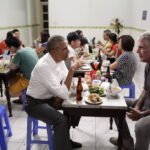
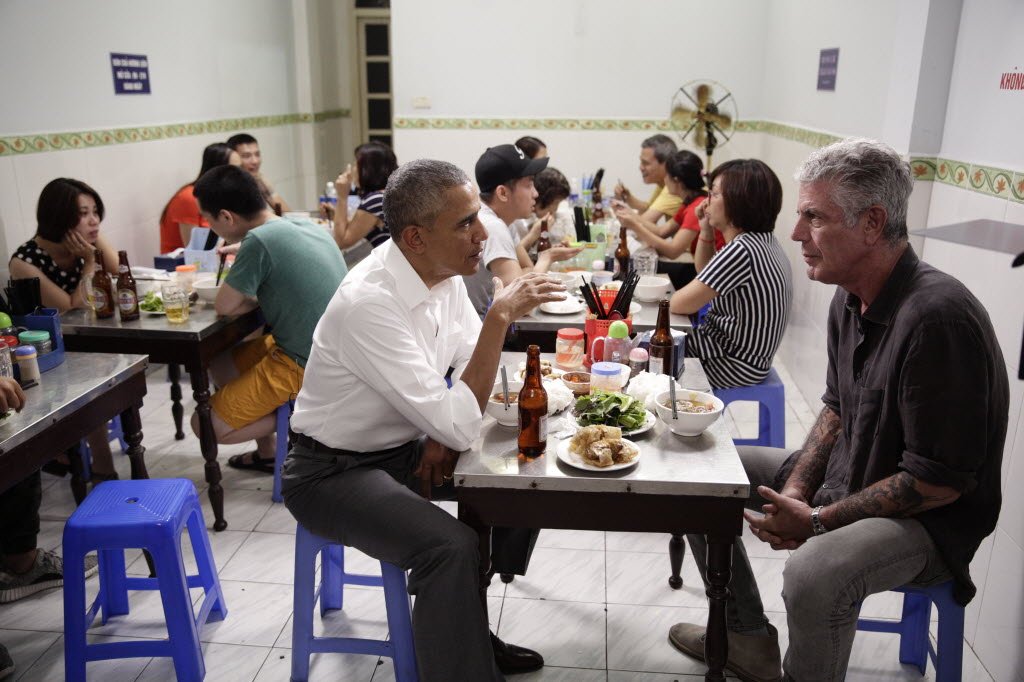
Where to try it: Bún Chả Hương Liên, at 24 Lê Văn Hưu, is where Barack Obama and Anthony Bourdain shared a meal in 2016; it is listed in the 2026 Michelin Guide. The guide’s 2026 Bib Gourmands include Bún Chả Ta at 21 Nguyễn Hữu Huân and Tuyết Bún Chả 34 at 34 Hàng Than, which grills its pork to order.
5. Chả cá Lã Vọng
Chả cá is turmeric-marinated fish, traditionally hemibagrus catfish (cá lăng), grilled and then finished at the table in a hot pan with lots of dill and spring onions, and eaten with rice vermicelli, peanuts, herbs and shrimp paste. The Đoàn family, who cooked grilled fish for their neighbors, opened an eatery on Hàng Sơn street in 1871, named after a statue of Lã Vọng, an ancient Chinese strategist remembered in legend for his fishing; the street was later renamed Chả Cá, Grilled Fish street, after it.
Where to try it: Chả Cá Thăng Long at 6B Đường Thành, a 2026 Bib Gourmand, serves only this dish, and a 2024 VnExpress guide recommended Chả Cá Lã Vọng at 14 Chả Cá street.
6. Bún đậu mắm tôm
Bún đậu mắm tôm is a much-loved Hanoi lunch of fresh rice vermicelli, golden fried tofu and herbs with a bowl of fermented shrimp paste mixed with kumquat juice, chili and sugar. Vendors fry the tofu on small stoves right on the sidewalk. The paste is pungent, but you can choose fish sauce instead, and extras include boiled pork, fried spring rolls and young green rice patties (chả cốm). Its origins are unknown, but a veteran vendor told VnExpress it was once the cheapest food around, just noodles, tofu and shrimp paste.
Where to try it: The chef-owner of Xới Cơm, a 2026 Bib Gourmand, chose it as a favorite Hanoi dish in a 2025 Michelin Guide feature and suggested calling ahead to have it prepared. VnExpress’s 2024 picks included a stall at 49 Phất Lộc alley in Hoàn Kiếm.
7. Phở cuốn
Phở cuốn takes phở out of the bowl: soft sheets of rice noodle are rolled around beef, vegetables and herbs, then dipped in a sweet and sour sauce. Phở Cuốn Chinh Thắng is said to be its birthplace, in 2000, and the tourism authority sends visitors to Ngũ Xã street on Trúc Bạch Lake to try it.
Where to try it: Phở Cuốn Chinh Thắng, at 7 Mạc Đĩnh Chi, is listed in the 2026 Michelin Guide, which also praises its deep-fried phở with beef gravy.
8. Xôi
Xôi is steamed sticky rice, and one of Hanoi’s classic versions is xôi xéo: sticky rice topped with fried shallots, a touch of pork fat and thin slices of mung bean paste. The mung beans are steamed, pounded and pressed into blocks, which the vendor slices over the rice to order. Sticky rice customs in Vietnam are often traced to Tai peoples who moved from Yunnan into the northwest.
Where to try it: VnExpress’s picks for xôi xéo include Xôi Yến on Nguyễn Hữu Huân street and May’s stall on Lý Thường Kiệt street, which it described in 2025 as packed every morning. Phở Hà Hàng Hòm, a 2026 Bib Gourmand, also sells xôi gà, sticky rice with chicken.
Snacks and street bites
9. Bánh cuốn
Bánh cuốn, a northern dish and a popular Hanoi breakfast, is a rice sheet so thin it is almost translucent, steamed from fermented rice batter on a cloth stretched over boiling water. It is rolled around minced pork, wood ear mushroom and shallots and served with chả lụa (pork sausage), herbs and a sweet and sour fish sauce dip.
Where to try it: Bánh Cuốn Gia Truyền Thanh Vân at 14 Hàng Gà, which VnExpress says has made bánh cuốn since 1973, is a 2026 Bib Gourmand. Bánh Cuốn Bà Hoành at 66 Tô Hiến Thành, which steams its sheets to order, is also in the 2026 guide.
10. Bánh mì
The French brought the baguette to Vietnam in the 1860s, and the filled sandwich known around the world took shape as Saigon street food in the 1950s. Northerners first called the bread bánh tây, or “Western bánh.” The usual filling is pâté, cold cuts such as chả lụa, pickles, herbs and chili.
Where to try it: A February 2026 VnExpress roundup of popular Hanoi stalls included one on Hàng Gai street, selling since 1979, whose unchanged recipe is pâté, char siu pork, pork floss, butter and red pork sausage, with no vegetables or pickles.
11. Nem rán
Nem rán, also called chả giò, is the fried spring roll: seasoned ground meat, usually pork, with mushrooms, vermicelli and vegetables, rolled in rice paper and deep-fried until crisp, then wrapped in lettuce and herbs and dipped in fish sauce. In the north, nem covers several kinds of rolls, including fresh nem cuốn, so ask for nem rán to get the fried one.
Where to try it: The tourism authority suggests ordering nem with bún chả, and Michelin’s inspectors single out the seafood crab roll at Bún Chả Ta.
12. Cốm
Cốm is young sticky rice, harvested green, then roasted, sifted and pounded until the grains are flat, chewy and green, and for many Hanoians it is the flavor of autumn. Vendors sell it wrapped in lotus or banana leaves, to eat plain or with ripe bananas or persimmons. The best-known cốm comes from Vòng village, where legend says farmers created it about a thousand years ago by stir-frying green rice rescued from a storm-damaged crop.
Where to try it: In season, buy it from street vendors; VnExpress has pointed to those on Lý Quốc Sư street.
Drinks and sweets
13. Egg coffee (cà phê trứng)
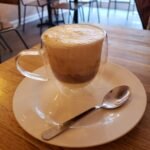
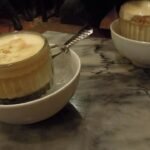
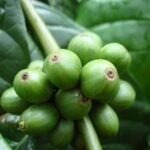
Egg coffee is a Hanoi creation: strong coffee dripped through a phin filter under a thick, sweet foam of egg yolk whipped with condensed milk and sugar. It is credited to Nguyễn Văn Giảng, with 1946 the year most often given, and the tourism authority notes how the sweet foam balances the strong robusta below.
Where to try it: Café Giảng, which carries his name, is at Alley 39, Nguyễn Hữu Huân street, according to the tourism authority. A coffee note: the same street is home to Café Lâm, one of Hanoi’s oldest coffee houses, whose founder began selling coffee in 1952.
14. Bia hơi
Bia hơi, or “fresh beer,” is a light draft lager of around 4 percent alcohol, brewed daily and delivered in steel barrels to small bars and street corners, mostly in northern Vietnam. It is drunk outdoors on low plastic stools, often over long, late meals. The tourism authority suggests toasting with “một, hai, ba, dô!” (one, two, three, cheers).
Where to try it: The best-known spot is Bia Hoi Corner, where Tạ Hiện and Lương Ngọc Quyến streets meet in the Old Quarter. The tourism authority suggests going after dark.
15. Chè
Chè is a family of Vietnamese sweet soups, puddings and drinks made from beans, tubers, sticky rice, jellies, fruit or coconut cream, served hot or cold. Black bean chè (chè đậu đen) is a particular favorite in the north, and in autumn Hanoi makes chè cốm from young green rice. One northern quirk: chè is also the word for the tea plant, so tea can be called nước chè.
Where to try it: Look for cafés and street stalls, where the tourism authority says the banana version, chè chuối, is easy to find.
How to order and eat Hanoi street food
Vietnam’s tourism authority calls sidewalk etiquette simple and forgiving:
- Eat early. Stalls go quiet once mealtimes are over, and the busier the stall, the more likely it is worth the wait.
- Take a stool. Order at the front, then sit at a table or on one of the low plastic stools spread across the sidewalk. At peak times, other diners may share your table; a smile is all that is needed.
- Point. Ask for “một suất” (one serving), point and say “một cái này” (one of these), or order whatever the next table is having.
- Use the table. Fish sauce, chili and garlic vinegar and lime are there to adjust the dish, herbs come free with noodles, and trà đá, iced green tea, replaces water.
- Eat first, pay later, in cash. At small stalls, pay the cook on the way out; “tính tiền” asks for the bill. Cash is used for street vendors, Vietnam uses only notes, and the 20,000 and 500,000 dong notes are similar shades of blue, so check before paying. Tipping is not expected.
A note on food safety
Vietnam’s tourism authority calls street food generally quite safe but advises using your judgment: look for places with a high turnover of customers that prepare food fresh, stick to bottled water, and avoid ice in rural areas. The US Centers for Disease Control and Prevention (CDC) is more cautious. Its general travel advice is to avoid street vendor food, or else to choose food that is cooked and steaming hot, avoid raw vegetables, and skip ice where drinking water may be contaminated. The fresh herbs served with many Hanoi dishes are raw, so they fall under that advice. For Vietnam, the CDC also recommends hepatitis A vaccination for unvaccinated travelers aged one year or older and typhoid vaccination for most travelers, so see a doctor or travel clinic before the trip.
Frequently asked questions
What is Hanoi’s most famous dish?
Phở. Vietnam’s tourism authority calls it the country’s national dish and says Hanoi is the most famous place to have it, and the Michelin Guide notes that the city is widely believed to be its birthplace. The tourism authority ranks bún chả second.
Is Hanoi street food safe?
Official advice differs. Vietnam’s tourism authority calls street food generally quite safe and recommends busy stalls that cook fresh; the CDC advises avoiding it, or at least sticking to food that is cooked and steaming hot and skipping raw vegetables.
Where did Obama eat bún chả in Hanoi?
At Bún Chả Hương Liên, 24 Lê Văn Hưu, in May 2016, with Anthony Bourdain, who was filming his show Parts Unknown.
How is Hanoi phở different from Saigon phở?
Hanoi phở is more restrained. Peter Cuong Franklin, chef of Ănăn Saigon, told the Michelin Guide that Hanoi-style phở comes with fried dough sticks and pickled garlic, while Saigon-style phở offers more herbs and bean sprouts. The two styles also differ in noodle width and in the sweetness of the broth.
Do you need cash for street food in Hanoi?
Yes. Vietnam’s tourism authority says cash is used for small purchases and street vendors, even though most hotels and restaurants accept major cards.
Featured image: Barack Obama and Anthony Bourdain eating bún chả at Bún Chả Hương Liên in Hanoi, May 23, 2016. Photo: White House Photo Office, public domain, via Wikimedia Commons.