Café Lâm is one of Hanoi’s oldest coffee houses, at 60 Nguyễn Hữu Huân in the Hoàn Kiếm area, a short walk from Hoàn Kiếm Lake. Its founder, Nguyễn Văn Lâm, started selling coffee from a pushcart in 1952 and went on to build one of Vietnam’s best-known private art collections, largely from paintings that struggling artists gave him to settle their coffee tabs. This guide covers the café’s story, what makes it worth a visit, and the other historic cafés on the same street.
A note on this site: Cafelam is an independent travel and food guide. Our name nods to Café Lâm, but the café does not run this site and we are not affiliated with it.
The story of Café Lâm
According to interviews with the Lâm family published in the Vietnamese press, Nguyễn Văn Lâm began in 1952 with a coffee pushcart. When the crowds around his cart drew complaints, he moved to a rented spot on Hàng Vôi street, and about a year later he bought the house at 60 Nguyễn Hữu Huân, where Café Lâm took the shape it still has.
The café became a meeting place for Hanoi’s painters, poets and writers. Many of the artists who drank there were poor, and paintings had little market value at the time. Lâm let them run up tabs, and the family says artists often paid those debts, or simply thanked him, with their work. He is also said to have lent some of them money for paper and paint. Lâm kept everything, noting when and how each piece came to him.
Over the decades the collection grew to more than 700 works, according to a 2019 interview with Lâm’s eldest grandson. The family has sold only a small number of pieces, and the collection has remained largely intact and in the family’s care.
The artists on the walls
The painters most associated with Café Lâm are among the most important names in modern Vietnamese art. Press accounts of the collection name:
- Bùi Xuân Phái (1920 to 1988), famous for his paintings of Hanoi’s Old Quarter streets, so closely tied to them that locals call such scenes “Phố Phái,” Phái’s streets. He was a regular at the café.
- Nguyễn Sáng, Nguyễn Tư Nghiêm and Dương Bích Liên, who with Bùi Xuân Phái are often grouped as the leading painters of their generation.
- Tô Ngọc Vân, Nguyễn Tường Lân, Nguyễn Gia Trí and Trần Văn Cẩn.
One of the most talked-about pieces is a portrait of Lâm himself by the composer and painter Văn Cao, which hangs in the center of the main wall. Writers including Nguyễn Tuân also counted among the café’s regulars.
What to expect if you visit
Café Lâm is not a polished museum. It is a small, dim, old-fashioned coffee house with paintings crowding the walls, and on busy days people spill out onto low plastic stools on the sidewalk, Hanoi style. A 2019 report described the room as barely changed from decades earlier, and said the café was being run by Lâm’s grandchildren, with several family-run Café Lâm outlets on the street.
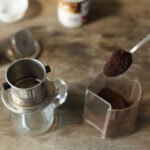
- What to order: start with classic Vietnamese coffee: cà phê đen (black) or cà phê sữa (with condensed milk), hot or iced. If you want to make it at home afterwards, here is how to make Vietnamese iced coffee with a phin filter.
- When to go: mornings are when Hanoi’s café culture is at its liveliest. Go early to get a seat inside near the paintings.
- Before you go: opening hours and which of the family’s outlets is open can change, so check recent reviews or map listings before making a special trip.
- Be respectful: it is a working café and a family collection, not a gallery. Ask before photographing people, and buy a drink if you come in to look at the art.
Nguyễn Hữu Huân street: Hanoi’s coffee street
Café Lâm shares Nguyễn Hữu Huân street with Café Giảng, and other historic cafés are a short walk away in the Old Quarter, which makes it easy to turn a visit into a short coffee walk. For more of the city, see the guide to things to do in Hanoi.
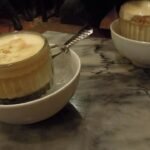
- Café Giảng, at 39 Nguyễn Hữu Huân, is the café most associated with Hanoi’s famous egg coffee, cà phê trứng. Its founder, Nguyễn Văn Giảng, is credited with creating the drink around 1946: egg yolk whipped with sugar and condensed milk into a thick foam over strong coffee.
- Café Năng, another of Hanoi’s old family cafés, is known for bạc xỉu, a milky coffee with much more milk than coffee.
Nguyễn Hữu Huân is close to Hoàn Kiếm Lake and the Old Quarter, so these cafés are easy to combine with a walk around the lake.
Why Café Lâm matters
Hanoi has thousands of cafés, but very few hold a piece of the city’s cultural history the way Café Lâm does. In the years when Vietnam’s great modern painters could not sell their work, a coffee seller kept it safe. Today the paintings on its walls are a record of those artists and of the café culture that supported them, and you can still sit among them with a coffee.
Frequently asked questions
Where is Café Lâm in Hanoi?
Café Lâm is at 60 Nguyễn Hữu Huân street in the Hoàn Kiếm area of central Hanoi close to Hoàn Kiếm Lake.
When was Café Lâm founded?
Its founder, Nguyễn Văn Lâm, started selling coffee in 1952, first from a pushcart and then from a shop, before moving to the current house on Nguyễn Hữu Huân.
Why are there so many paintings in Café Lâm?
Many of Hanoi’s artists were regulars who could not afford to pay, and they gave Lâm paintings to settle their coffee tabs or as gifts. He kept them, and the collection grew to more than 700 works by painters such as Bùi Xuân Phái and Nguyễn Sáng.
Does Café Lâm serve egg coffee?
Café Lâm is best known for classic Vietnamese coffee and its art. To make the same style of coffee at home, see how to use a phin filter. Egg coffee is most closely associated with Café Giảng, a few doors along the same street, where it is said to have been invented around 1946.
Is Café Lâm worth visiting?
Yes, if you are interested in Hanoi’s history or Vietnamese art. It is a simple, old-fashioned café rather than a modern coffee shop, and that is the point: it is one of the few places where you can drink coffee surrounded by work from Vietnam’s most celebrated twentieth-century painters.