Caffeine in espresso vs coffee comes down to what you measure. Ounce for ounce, espresso is more than five times as concentrated: USDA FoodData Central data work out to about 63 mg of caffeine in a 1 fl oz shot and about 12 mg in a fluid ounce of brewed coffee. Per serving the order flips on those figures: an 8 fl oz cup of brewed coffee comes to about 95 mg and a 12 fl oz cup to about 142 mg, so a single shot carries less caffeine than either, while a double shot, at about 126 mg, falls between them.
Espresso vs drip coffee caffeine: the USDA numbers
The table draws on two USDA FoodData Central datasets: SR Legacy (April 2019), where the espresso and brewed coffee caffeine values are analytical, from two and eight data points last updated in 1996 and 2004, and the FNDDS survey data (October 2024), which builds milk drinks from ingredient recipes. The brewed coffee record names no brewing method, and its USDA footnote reads “Includes fast food and home brewed coffee,” so it serves here as the general figure for drip.
| Drink (USDA record) | FDC ID, data type | Caffeine per 100 g | Per fl oz | Per serving, as the record lists it |
|---|---|---|---|---|
| Espresso, restaurant-prepared | 171891, SR Legacy | 212 mg | 63 mg | 63 mg in 1 fl oz (29.6 g) |
| Espresso | 2710378, FNDDS | 212 mg | 64 mg | 127 mg in one 2 fl oz espresso cup (60 g) |
| Brewed coffee, prepared with tap water | 171890, SR Legacy | 40 mg | 12 mg | 95 mg in an 8 fl oz cup (237 g) |
| Instant coffee, prepared with water | 174130, SR Legacy | 26 mg | 8 mg | 47 mg in a 6 fl oz serving (179 g) |
| Cappuccino, 2% or whole milk | 2710472, FNDDS | 36 mg | 11 mg | 86 mg in 8 fl oz (240 g); 130 mg in a “small” (360 g) |
| Latte, nonfat milk | 2710387, FNDDS | 36 mg | 11 mg | 86 mg in 8 fl oz (240 g); 130 mg in a “small” (360 g) |
| Iced coffee, brewed (ice counted in) | 2710428, FNDDS | 31 mg | 9 mg | 74 mg in 8 fl oz (240 g); 112 mg in a “small” (360 g) |
| Decaf brewed coffee | 171889, SR Legacy | 1 mg | 0.3 mg | 2 mg in an 8 fl oz cup (237 g) |
| Decaf espresso | 174125, SR Legacy | 1 mg | 0.3 mg | 0.3 mg in 1 fl oz (29.6 g) |
How the table was calculated: caffeine per 100 g times the gram weight of a portion listed in the same record, divided by 100. The per fl oz column uses each record’s own fluid ounce weight (29.6 g, 29.8 g for instant, 30 g in FNDDS). Rounded to whole milligrams (one decimal below 1 mg). The FNDDS “small” weighs 360 g, about 12 fl oz.
One 8 fl oz cup of brewed coffee equals about one and a half single shots. Both USDA milk-drink recipes use 2 fl oz of espresso as their only coffee, so a small latte or cappuccino lands near a double shot. Decaf is not caffeine-free either: about 2 mg per 8 fl oz cup in USDA data, a calculated rather than measured value, and 2 to 15 mg in the FDA’s typical range.
Why espresso wins per ounce but usually loses per cup
Espresso is concentrated because it uses much more coffee for each ounce of water. Starbucks gives its espresso ratio as about 1:2 to 1:3, coffee to water, and its brewed coffee as about 1:15 to 1:18. Swiss researchers who tested nine ways of making coffee (European Food Research and Technology, 2013) used about 8 g of grounds per 30 mL shot on their semi-automatic and fully automatic machines and about 100 g for a 1,800 mL jug of filter coffee.
In that study, espresso did not extract more caffeine per gram than filter coffee: 0.79 percent of the grounds’ weight for the semi-automatic espresso against 0.84 percent for filter, so the concentration gap comes mainly from the dose. At the study’s filter ratio, an 8 fl oz cup (240 mL under FDA labeling rules) takes about 13 g of grounds, against about 8 g for one of those 30 mL shots.
The lab’s espresso matched USDA closely: a 30 mL shot from the semi-automatic machine, close to one fluid ounce, held 63 mg. A 120 mL cup of its filter coffee, about 4 fl oz, held 56 mg, above the roughly 47 mg USDA’s per-ounce figure gives. A longer pull added little on the semi-automatic machine: a 120 mL lungo from 8 g of a slightly different roast held 66 mg, against 63 mg for the 30 mL espresso.
How much caffeine is in a shot of espresso?
On USDA data, a 1 fl oz single shot has about 63 mg, and the caffeine in a double shot of 2 fl oz comes to about 126 mg. Starbucks’ own figures run higher. It says one of its espresso shots has about 75 mg, and its menu lists the 1.5 fl oz Doppio at 150 mg, which works out to about 100 mg per fluid ounce against USDA’s 63 mg.
Shots bought in cafés vary even more. A University of Glasgow team bought single espressos at 20 coffee shops in Glasgow, UK, and caffeine per cup ran from 51 to 322 mg. The median was 140 mg, and 13 of the 20 held more than the roughly 95 mg in USDA’s 8 fl oz cup of brewed coffee. Most of the spread, they concluded, likely came down to how much coffee each barista used, more than bean blend, roasting or grinding.
Why the numbers vary
- Dose and brew ratio. Caffeine per drink mostly follows the dose of grounds, while the water-to-coffee ratio mainly sets how concentrated the drink is, as the Swiss espresso and lungo results above show.
- Shot size and count. USDA’s espresso record lists a 1 fl oz portion, its survey data a 2 fl oz cup (also the weight the survey uses when no amount is given), and Starbucks pours a 1.5 fl oz Doppio. Starbucks notes that caffeine rises with every extra shot.
- Bean species. Robusta carries more caffeine than arabica. Espresso blends use it to help build crema, the Glasgow paper notes, and instant coffee is its other main outlet.
- Roast. Darker roasts tend to extract less, so in a 2024 Scientific Reports study they usually yielded less caffeine than lighter roasts brewed identically; matched on extraction yield, the order reversed.
- Grind. Finer grinds generally extract more efficiently, but in the Swiss comparison grind mattered less than the water-to-coffee ratio, and a 2017 study found grind size made no significant difference to cold brew caffeine after long steeps.
- Chain recipes. The FDA gives 113 to 247 mg for 12 fl oz of regular, non-specialty brewed coffee; the USDA record works out to about 142 mg. Starbucks cites about 260 mg for a 12 oz tall brewed coffee.
Bean species and caffeine
| Measure | Arabica | Robusta | Source |
|---|---|---|---|
| Caffeine in green beans, by dry weight | 0.9 to 1.5% | 1.2 to 2.4% | Olechno et al., Foods, 2021 (review) |
| Same, in mg per gram (dry weight) | 9 to 15 mg | 12 to 24 mg | Converted from the row above |
| Caffeine in brewed coffee | Baseline | About 1.4 to 1.8 times arabica in most studies | Olechno et al., summary of brewing studies |
Among 38 wild arabica and 38 wild canephora (robusta) accessions analyzed for a 2001 Food Chemistry paper, canephora averaged more caffeine. Exceptions exist: the review cites one study where an arabica coffee-machine brew beat the robusta.
Cold brew vs espresso caffeine
USDA’s reference and survey data have no cold brew record; its iced coffee is hot-brewed coffee over ice, a different drink. Starbucks lists its 16 fl oz grande Cold Brew, ice included, at about 205 mg, more than its 150 mg Doppio, yet the espresso is far stronger: about 100 mg per fluid ounce against roughly 13 mg per ounce of cup volume. Starbucks’ description of cold brew helps explain the low per-ounce figure: a 12 to 20 hour concentrate, usually cut with water at the end.
In a 2017 study in Scientific Reports that brewed the same coffees hot and cold at an identical coffee-to-water ratio, the coarse-ground cold brews ended with considerably more caffeine than their 6-minute hot versions, while medium-ground pairs differed little; cold extraction leveled off after 6 to 7 hours. Bottled and café versions vary by recipe and dilution, so check the label or ask the maker, as the FDA suggests.
Where Vietnamese phin coffee fits
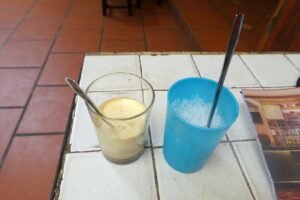
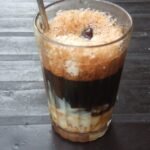
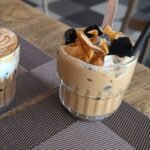
Traditional Vietnamese coffee drips slowly through a phin set on the cup, usually from robusta beans and a heavy dose of grounds. The guide to why Vietnamese coffee is so strong puts an all-robusta phin brewed from 10 to 14 g of coffee at roughly 100 to 220 mg, a figure worked out from lab extraction studies because few phin cups have been tested directly. Even the low end tops a 1 fl oz shot, and the high end tops a double. The iced milk version, cà phê sữa đá, sweetens the glass with condensed milk, which changes the taste, not the caffeine; the guide to coffee with condensed milk covers amounts.
How much caffeine is too much?
The FDA’s benchmark for most adults is 400 mg a day, roughly two to three 12 fl oz cups of coffee by its count, which it describes as “an amount not generally associated with negative effects.” On USDA averages, 400 mg is about six single shots, though one Glasgow café espresso held 322 mg alone. People differ widely in how strongly they react, the FDA adds.
If you are pregnant, breastfeeding or trying to conceive, the FDA’s advice is to ask a health care provider whether to cut back. The American College of Obstetricians and Gynecologists states that moderate intake, under 200 mg a day, “does not appear to be a major contributing factor in miscarriage or preterm birth” (Committee Opinion 462, reaffirmed in 2026). It also calls caffeine’s link to growth restriction undetermined and says no conclusion is possible yet on high intake and miscarriage. Four of the 20 Glasgow espressos topped 200 mg each. For children, the FDA cites the Dietary Guidelines for Americans: no caffeinated drinks before age 2. For older children and teens, it suggests talking with a health care professional.
Frequently asked questions
Does espresso have more caffeine than coffee?
Per fluid ounce, yes: about 63 mg for espresso against about 12 mg for brewed coffee in USDA data. Per serving, usually not: a 1 fl oz single shot falls short of the roughly 95 mg in an 8 fl oz cup of brewed coffee. A double shot, about 126 mg, beats that cup but not a 12 fl oz cup, at about 142 mg.
How much caffeine is in a shot of espresso?
About 63 mg in a 1 fl oz single shot, in USDA data. Café shots vary more: Starbucks cites about 75 mg per shot, and a Glasgow study of 20 coffee-shop espressos measured 51 to 322 mg per serving.
How much caffeine is in a double shot of espresso?
About 126 mg in 2 fl oz on USDA figures, or 127 mg for the 2 fl oz espresso cup in USDA’s survey data. Starbucks lists its 1.5 fl oz Doppio at 150 mg. USDA’s small latte and cappuccino recipes use the same 2 fl oz of espresso and come to about 130 mg. On USDA figures, a double is about a third of the FDA’s 400 mg daily figure for most adults.
Is espresso stronger than coffee?
In concentration, yes. USDA puts espresso at 212 mg of caffeine per 100 g against 40 mg for brewed coffee, and its water figures leave 2.2 g of solids per 100 g of espresso against 0.6 g for brewed coffee; the Swiss researchers write that body “is often related to the total solids.” Still, a full mug of brewed coffee usually delivers more caffeine.
How much caffeine is too much?
The FDA’s figure for most adults is 400 mg a day, which it calls “an amount not generally associated with negative effects,” and reactions vary a lot between people. In pregnancy, the FDA advises asking a health care provider; ACOG says intake under 200 mg a day “does not appear to be a major contributing factor in miscarriage or preterm birth” and calls the link to growth restriction undetermined.
How much caffeine is in an Americano?
Count the shots. An Americano is espresso topped up with hot water, which adds no caffeine, so on USDA figures one 1 fl oz shot gives about 63 mg and two give about 126 mg.
Sources
- USDA Agricultural Research Service, FoodData Central: SR Legacy records 171891, 171890, 174130, 171889 and 174125 (published April 1, 2019) and FNDDS records 2710378, 2710472, 2710387 and 2710428 (published October 31, 2024), accessed November 3, 2026.
- US Food and Drug Administration, Spilling the Beans: How Much Caffeine is Too Much?, content current as of August 28, 2024.
- American College of Obstetricians and Gynecologists, Committee Opinion No. 462, Moderate Caffeine Consumption During Pregnancy, August 2010, reaffirmed 2026.
- Code of Federal Regulations, 21 CFR 101.9, Nutrition labeling of food, current text accessed November 3, 2026.
- Gloess and colleagues, Comparison of nine common coffee extraction methods: instrumental and sensory analysis, European Food Research and Technology, January 30, 2013.
- Crozier, Stalmach, Lean and Crozier, Espresso coffees, caffeine and chlorogenic acid intake: potential health implications, Food and Function, 2012.
- Olechno and colleagues, Influence of Various Factors on Caffeine Content in Coffee Brews, Foods, June 2021.
- Ky and colleagues, Caffeine, trigonelline, chlorogenic acids and sucrose diversity in wild Coffea arabica L. and Coffea canephora P. accessions, Food Chemistry, 2001.
- Lindsey and colleagues, Caffeine content in filter coffee brews as a function of degree of roast and extraction yield, Scientific Reports, November 25, 2024.
- Fuller and Rao, The Effect of Time, Roasting Temperature, and Grind Size on Caffeine and Chlorogenic Acid Concentrations in Cold Brew Coffee, Scientific Reports, December 21, 2017.
- Starbucks, Coffee Science: Which Starbucks drink has the most caffeine, April 30, 2026.
- Starbucks, Espresso nutrition (Doppio) and Cold Brew nutrition (Grande), accessed November 3, 2026.
Part of the Vietnamese coffee guide.
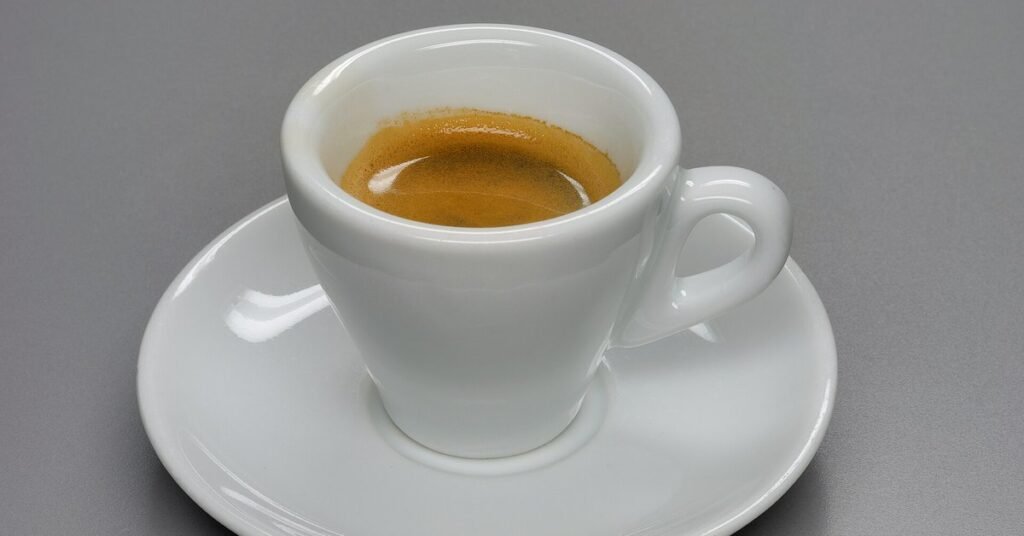
Featured image: A single espresso in a white porcelain cup. Photo: Berthold Werner, public domain, via Wikimedia Commons (cropped).