
For most travelers, the best time to visit Hanoi is October, when highs average about 29°C (85°F), wet days are down to about 10 and the month gets around 150 hours of sun. The trade-offs are the tail of storm season, which flooded parts of the city in October 2025, and air: at the US Embassy monitor from 2022 to 2024, October’s PM2.5 averaged 51 µg/m³ and 38% of days reached the US EPA’s Unhealthy range. For cleaner air without summer’s peak heat, look at May, which averaged 32 µg/m³ with highs near 32°C (89°F) and more rain; June to August had the monitor’s cleanest air along with the most heat and rain, and November to January is drier and cooler but had its worst air.
The weather figures below come from Vietnam’s building code, the air figures are computed here from hourly readings, and the verdicts are this article’s own reading of both.
Hanoi weather by month
Every value in the °C, mm, rainy-day, sunshine and humidity columns below comes from QCVN 02:2022/BXD, the national regulation on climate data for construction that Vietnam’s Ministry of Construction issued in September 2022. Its station list gives central Hanoi one entry, Láng in Đống Đa district (21.03°N, 105.80°E, 5 m above sea level), and its monthly tables list the city’s stations as Ba Vì, Hà Đông, Sơn Tây and Hà Nội, so the Hà Nội row is read here as Láng. The code states no observation period for these monthly tables. A 2026 explanatory note on the website of the institute that led the drafting says the code’s data run to 2017, so these are long-term averages and leave out the most recent years. Fahrenheit is °C × 1.8 + 32, rounded to the nearest degree; inches are mm ÷ 25.4, rounded to one decimal.
| Month | Average | Average high | Average low | Rainfall | Rainy days | Sunshine (hours) | Humidity |
|---|---|---|---|---|---|---|---|
| January | 16.6°C (62°F) | 19.8°C (68°F) | 14.5°C (58°F) | 22.5 mm (0.9 in) | 9.5 | 68.7 | 79.9% |
| February | 17.7°C (64°F) | 20.6°C (69°F) | 15.8°C (60°F) | 24.6 mm (1.0 in) | 11.4 | 48.1 | 82.5% |
| March | 20.3°C (69°F) | 23.2°C (74°F) | 18.4°C (65°F) | 47.0 mm (1.9 in) | 15.9 | 45.5 | 84.5% |
| April | 24.2°C (76°F) | 27.7°C (82°F) | 21.9°C (71°F) | 91.8 mm (3.6 in) | 13.7 | 87.4 | 84.7% |
| May | 27.6°C (82°F) | 31.9°C (89°F) | 24.8°C (77°F) | 185.4 mm (7.3 in) | 14.6 | 173.7 | 81.1% |
| June | 29.3°C (85°F) | 33.4°C (92°F) | 26.4°C (80°F) | 253.3 mm (10.0 in) | 14.8 | 167.0 | 80.0% |
| July | 29.4°C (85°F) | 33.4°C (92°F) | 26.5°C (80°F) | 280.1 mm (11.0 in) | 16.6 | 181.1 | 80.7% |
| August | 28.7°C (84°F) | 32.6°C (91°F) | 26.1°C (79°F) | 309.4 mm (12.2 in) | 16.5 | 163.0 | 82.7% |
| September | 27.7°C (82°F) | 31.5°C (89°F) | 25.2°C (77°F) | 228.3 mm (9.0 in) | 13.2 | 162.4 | 81.0% |
| October | 25.3°C (78°F) | 29.2°C (85°F) | 22.8°C (73°F) | 140.7 mm (5.5 in) | 9.7 | 150.3 | 78.5% |
| November | 21.9°C (71°F) | 25.7°C (78°F) | 19.3°C (67°F) | 66.7 mm (2.6 in) | 6.8 | 131.6 | 77.1% |
| December | 18.3°C (65°F) | 22.0°C (72°F) | 15.8°C (60°F) | 20.2 mm (0.8 in) | 5.2 | 113.0 | 76.2% |
A count of rainy days can mislead. March logs 15.9 of them, nearly as many as July’s 16.6, yet only 47.0 mm falls in March against 280.1 mm in July: about 3 mm per wet day against about 17 mm. The code counts 9.4 drizzle days in March and none from June to October.
Late winter is the dimmest stretch of the year. February and March each get under 50 hours of sunshine, under two hours a day, while October gets 150.3 hours. Humidity never drops far, from 76.2% in December to 84.7% in April. The code also describes nồm, a damp spell from February to April in the eastern part of the north, when air at 20 to 25°C passes 95% humidity.
October 2026 ran hot. Northern Vietnam was 2 to 3°C warmer than its multi-year average that month, Vietnam’s National Center for Hydro-Meteorological Forecasting (NCHMF) reported, in the hottest October for the whole country since its series began in 1961.
Hanoi air quality by month
Of the nine weather and best-time guides checked for this article, one mentions air pollution and none mentions PM2.5, the fine particles that can reach deep into the lungs. Yet the monthly average below more than doubles between July and December. The table below was computed for this article from hourly readings at the US Department of State’s monitor in Hanoi, known as the embassy monitor, which AirNow’s site list places at about 21.02°N, 105.82°E, some 3.5 km west of Hoàn Kiếm Lake. It is one site, not a city average.
The State Department’s yearly CSV files, the usual route to these readings, could not be reached when this was checked on November 8, 2026, because their website did not resolve. The figures come instead from the hourly files in the US EPA’s AirNow archive, which AirNow says hold only valid data and which it labels preliminary, “not fully verified or validated.” AirNow also calls these raw data that should not replace validated records, and warns against using them to “ascertain trends” or “act as guidance,” so read this table as a rough seasonal picture from one monitor, not an official record. An hour with no row counts as missing, months are local time (UTC+7), and each monthly figure is the plain average of its valid hours. Daily figures use days with at least 18 valid hours.
The record has real gaps and an end date. In AirNow’s files, April 2022 has no rows at all, and October 2022, November 2023, August 2024 and December 2024 each have under 35% of their hours: those cells carry an asterisk and stay out of the average column. The November 2023 gap belongs to AirNow’s files, not the monitor. A third party’s copy of the State Department’s own CSV files, posted on GitHub in May 2025, matches AirNow on all 21,902 hours both hold and adds 726 more: 554 in November 2023, which then averages 61 instead of 43, 144 in December 2023, which goes from 56 to 53, and 28 in May 2022, which goes from 29 to 27. On that copy November’s average is 60 and December’s 61, so the three worst months and their order stay the same. The other gaps are the same in both. Hanoi’s rows stop at 21:00 on April 9, 2025, weeks after the State Department said in March 2025 that budget limits were ending the feed, and a one-hour-a-day check of AirNow’s files through November 7, 2026 found none since. So 2022 to 2024 are the latest full calendar years inside that record, gaps included.
Monthly mean PM2.5 is in µg/m³. The average column is the mean of the yearly figures, worked out before rounding, so it can differ by 1 from an average of the whole numbers shown. The days column counts days whose mean passed 55.4 µg/m³, where the EPA’s Unhealthy category starts, across all three years, starred months included (910 days in all). This is the first band in which AirNow says some of the general public, not only sensitive groups, may feel health effects; for those groups it warns of worse.
| Month | 2022 | 2023 | 2024 | Average | Days Unhealthy or worse | Valid hours, 2022 / 2023 / 2024 |
|---|---|---|---|---|---|---|
| January | 52 | 77 | 43 | 57 | 45% | 739 / 732 / 701 |
| February | 37 | 48 | 41 | 42 | 20% | 668 / 669 / 693 |
| March | 39 | 61 | 54 | 51 | 39% | 505 / 629 / 739 |
| April | no data | 47 | 46 | 46 | 25% | 0 / 715 / 712 |
| May | 29 | 35 | 34 | 32 | 1% | 548 / 692 / 737 |
| June | 32 | 30 | 33 | 32 | 1% | 696 / 671 / 710 |
| July | 27 | 26 | 25 | 26 | 0% | 710 / 735 / 741 |
| August | 27 | 32 | 24* | 29 | 0% | 737 / 737 / 154 |
| September | 43 | 34 | 35 | 38 | 12% | 684 / 714 / 486 |
| October | 57* | 46 | 56 | 51 | 38% | 176 / 734 / 680 |
| November | 52 | 43* | 67 | 59 | 52% | 714 / 159 / 716 |
| December | 69 | 56 | 62* | 62 | 51% | 735 / 485 / 249 |
The cool, dry months are the smoggy ones. December (62), November (59) and January (57) top the table, and about half of November and December days reached the Unhealthy range. Cleanest are July (26) and August (29), then June and May (both 32), with no Unhealthy days counted in July or August. Spring is not much better: March matched October at 51. In this table October and November can be compared cleanly only in 2024, 56 against 67, because October 2022 and November 2023 are starred; the fuller copy adds 2023, 46 against 61. Years differ widely too, with January running from 43 in 2024 to 77 in 2023, so treat any month’s figure as a middle of a range. Only 4 of the 910 days reached the next EPA band up, Very Unhealthy.
For scale, the World Health Organization’s guideline levels for PM2.5 are 15 µg/m³ over 24 hours and 5 µg/m³ over a year. Every month in the table averaged above 15, and the yearly means of 41, 44 and 44, gaps included, are more than eight times the annual figure. IQAir’s 2024 average for Hanoi, 45 µg/m³, sits close to this monitor’s 44.
Time of day matters as well. Hours here are labeled by their start, as in AirNow’s files. Over the same three years, October and November readings averaged about 38 µg/m³ at 14:00 and 72 at 19:00, with a smaller peak of 67 at 06:00. December to February ran from about 43 at 14:00 to 64 at 19:00. On those numbers, from October to February outdoor exercise is better placed in the early afternoon than at dawn or in the evening. In summer, the afternoon brings the heat described below.
Officials point to the weather for the seasonal swing. In winter, a deputy director of Hanoi’s environment department told a November 2024 conference, unstable weather pins pollution close to street level. Summer reverses that, VnExpress’s account of the city’s 2024 air-quality plan says, and it names rain and sea winds as the reasons.
The CDC’s Yellow Book for travelers advises checking air quality before a trip. Where it is poor, the chapter points to a NIOSH-approved filtering respirator such as an N95 or P100, and it rates bandanas and surgical or dust masks as limited protection once pollution turns severe. Travelers with asthma, COPD or heart disease get a separate warning: on days with a poor index, long or strenuous time outdoors is what the chapter says to limit. With the embassy feed off, Hanoi’s environmental monitoring portal, moitruongthudo.vn, is one place to see current readings. Its AQI follows Vietnam’s VN_AQI method, so do not read its numbers against the US EPA bands used here.
Best time to visit Hanoi month by month: the verdict
These labels are this article’s own reading of the two tables above, weighing comfort, rain and air. PM2.5 figures are monthly means in µg/m³ at the embassy monitor, 2022 to 2024. They are not an official ranking, and someone with asthma should give the air figures far more weight.
| Month | Verdict | The trade-off |
|---|---|---|
| January | Cool with poor air | Coolest month, 14.5 to 19.8°C (58 to 68°F), with little rain, but PM2.5 of 57 and only 68.7 hours of sun. |
| February | Mixed | The cleanest air of the cool months at 42, but 48.1 hours of sun and building drizzle. Tet falls here in 2027. |
| March | Weakest month | The dimmest month at 45.5 hours, with 9.4 drizzle days, 84.5% humidity and PM2.5 of 51. |
| April | Mixed | Warm at 21.9 to 27.7°C (71 to 82°F), but 87.4 hours of sun and PM2.5 of 46, with a quarter of days Unhealthy. |
| May | Pick for cleaner air | PM2.5 of 32, 173.7 hours of sun and flame trees, against highs near 32°C (89°F), 185.4 mm of rain and thunder on about 9 days. |
| June | Hot, fair air | Highs of 33.4°C (92°F) and 253.3 mm of rain, with PM2.5 of 32. |
| July | Cleanest air, hard heat | The lowest PM2.5 at 26 and quieter hotels, against highs of 33.4°C (92°F), 280.1 mm of rain and the peak in storm landfalls. |
| August | Wettest month | 309.4 mm over 16.5 rainy days and the second-highest storm landfall rate, with PM2.5 of 29. |
| September | Good, with flood risk | 162.4 hours of sun and PM2.5 of 38, but 228.3 mm of rain, and Hanoi flooded in each of the last three Septembers. |
| October | Best all-round | Highs near 29°C (85°F), lows near 23°C (73°F), 9.7 rainy days and 150.3 hours of sun, though PM2.5 climbs to 51, 38% of days were Unhealthy, and typhoon rain flooded parts of the city in October 2025. |
| November | Best weather, poor air | 19.3 to 25.7°C (67 to 78°F), 6.8 rainy days and 131.6 hours of sun, but PM2.5 of 59, over half of days Unhealthy, and busier hotels. |
| December | Dry and cool, worst air | The driest month at 20.2 mm, 15.8 to 22.0°C (60 to 72°F), with the highest PM2.5 at 62. |
Crowd figures are thinner, and they do not all point the same way. Hanoi’s tourism department estimated hotel occupancy at 56.94% in July 2025 and about 58% in July 2026, against 73.4% in November 2025, and put international visitors at 851,100 that November against an estimated 553,190 the previous July. Total visitors, domestic travelers included, ran the other way: about 2.8 million in July 2025 and 2.5 million in November. Vietnam Airlines’ Hanoi guide calls October to February peak season and May to September the off-season. The sources checked here give no month-by-month hotel prices, so this guide makes no claim on price.
Autumn also has its own food. Persimmons and cốm, the flattened green rice of Vòng village, were the seasonal foods named in a report on Vietnam Airlines’ 2026 autumn campaign with the city; more in what to eat in Hanoi.
The best time to visit Hanoi according to Vietnam’s tourism authority
The Viet Nam National Authority of Tourism gives two overlapping answers. Its Hanoi destination page picks September to November and adds May for its flame trees. Its climate guide, updated October 18, 2026, widens the window to April through June or September through December. Neither page mentions Hanoi’s air quality.
The code’s numbers mostly back that advice, with four cautions. The destination page calls autumn cool and dry, yet September still gets 228.3 mm (9.0 in) of rain and highs of 31.5°C (89°F). The climate guide labels April to June sunny, but April averages 87.4 hours of sunshine, half of May’s 173.7, along with 13.7 rainy days. Its figure of around 25 degrees for September to November fits October best, since September averages 27.7°C (82°F) and November 21.9°C (71°F). And its lows of 10 degrees from late December to March sit below the code’s average January low of 14.5°C (58°F), so read them as cold-snap figures.
Dates that change a Hanoi trip
| Date | What happens | What it means for a visitor |
|---|---|---|
| Tuesday, November 24, 2026 | Vietnam Culture Day (Ngày Văn hóa Việt Nam). | Government staff get the day off. |
| Saturday, February 6, 2027 | Tet (Tết), the Lunar New Year. Government staff are off February 4 to 10. | The railway’s Tet peak runs January 23 to February 25. On Mùng 1, the first day of the lunar year, traditional markets and small shops in many localities were shut in 2026. See the Tet 2027 guide. |
| Friday, April 16, 2027 | Hùng Kings’ Day, day 10 of lunar month 3. | Public holiday under the Labor Code. |
| Friday, April 30 and Saturday, May 1, 2027 | Victory Day and International Labor Day. | Public holidays under the Labor Code. |
| Thursday, September 2 to Sunday, September 5, 2027 | National Day break. | Four days in a row, two of them the weekend. |
| Wednesday, September 15, 2027 | Mid-Autumn Festival, day 15 of lunar month 8. | Lanterns and lion dances around Hàng Mã Street, the tourism authority says. |
| Moves each year | Hanoi Autumn Festival: from November 21 in 2025, September 25 to 27 in 2026. | Check the city’s announcement for the current year. |
| Moves each year | Ho Chi Minh Mausoleum maintenance closure: June 2 to July 31 in 2025, September 4 to November 2 in 2026. | The reports cited here give no 2027 dates, so check before planning around it. Viewing hours are in things to do in Hanoi. |
Storm season and flooding in Hanoi
The building code puts Vietnam’s storm season at June to November, with landfalls on the northern coast concentrated from June to September. For 1961 to 2017 the code’s frequency table gives the stretch from Quảng Ninh to Thanh Hóa 0.54 storm or tropical depression landfalls for July, 0.47 for August, 0.39 for September, 0.21 for June and 0.12 for October, read here as an average per year, since the table states no unit. Autumn is no guarantee, though: the wettest single days in the code’s Hanoi record fall in November (394.9 mm, 15.5 in) and October (347.0 mm, 13.7 in).
Recent floods show the range. They are examples, not a count by month:
- September 2024, Typhoon Yagi. Hanoi’s first flood alert went out by noon on September 10, after the Red River climbed to 9.5 m at Long Biên around 11:10, and Long Biên Bridge shut at 3 pm. The water went on to the third alert level, 11.5 m. Inner-city districts stayed safe behind the dykes, the head of NCHMF said, though Việt Nam News ran a photo of water in Chương Dương Độ, part of Hoàn Kiếm District. The railway past Hanoi Train Street crosses that bridge, so check the timetable after a flood.
- September 30, 2025, after Typhoon Bualoi. Vietnam’s weather agency counted Hanoi among the places with more than 30 cm in 24 hours. By 1 pm Hanoi’s drainage company had logged 65 badly flooded spots, and by the afternoon Tuổi Trẻ News had water at waist height on Thái Hà, Thái Thịnh and Trần Quang Diệu. The Associated Press went further, calling most of the city’s streets flooded, and said the rain had disrupted flights at Nội Bài.
- October 2025, Typhoon Matmo. Hanoi’s drainage company measured between 80 mm and nearly 250 mm in parts of downtown in the seven hours after midnight on October 7, Tuổi Trẻ News reported, and Reuters said flights at Nội Bài were delayed or rescheduled. The following night the Cầu and Cà Lồ rivers spilled into the former Sóc Sơn district, on the city’s northern edge, flooding thousands of homes, worst in two communes, according to VnExpress.
- September 16 to 17, 2026. The report on this one gives converging southeast winds as the cause. Hanoi’s drainage company recorded mostly 80 to 160 mm, with 199 mm at Từ Liêm, and water lay on streets around Mỹ Đình and elsewhere.
For November 2026 to January 2027, NCHMF expects fewer storms than the usual 2.8 in the East Sea and 1.1 landfalls, with November rain in the north running 15 to 30% above normal. If a trip falls between June and mid-October, leave a spare day before any onward flight.
Winter in Hanoi: cold snaps and what to pack
On average, December to February is cool, not freezing: highs of about 20 to 22°C (68 to 72°F) and lows of about 15 to 16°C (58 to 60°F). Cold spells go well below that. The code’s lowest readings are 5.0°C (41°F) in February, 5.1°C (41°F) in December and 5.4°C (42°F) in January. In NCHMF bulletins, look for rét đậm, a day averaging 15°C or lower, and rét hại, 13°C or lower.
This winter may be milder. NCHMF’s outlook has December and January 0.5 to 1.5°C above average under a very strong El Niño, with later and fewer cold days in the north, although short, sharp cold spells remain possible.
What to pack for December to February, compiled from the figures above:
- A sweater and a light jacket for most days, plus a warmer layer in case a cold snap arrives. Bring socks and closed shoes.
- A thin rain shell. Drizzle days climb from 5.2 in January to 7.2 in February and 9.4 in March.
- A NIOSH-approved N95 or P100 respirator if air quality matters to you (see above). The CDC adds that respirators carry no NIOSH approval for children.
A cold-month order worth finding is egg coffee, a Hanoi creation. The Michelin Guide describes a small cup standing in a bowl filled with hot water to hold its heat.
Summer in Hanoi: heat, humidity and quieter July hotels
June and July both average highs of 33.4°C (92°F), and nights only cool to about 26.5°C (80°F). Enter that high and the month’s average lowest humidity, 64.5%, into the US National Weather Service heat index equation and the result is about 108°F (42°C). Treat that as rough, since the hottest and driest hours of a day need not match. The code’s record is 41.8°C (107°F), in its June column. From May through August, thunder comes on about 10 days a month.
The payoff is air: no day counted in July or August reached the Unhealthy range. July hotel occupancy also sits well below November’s, as the figures above show.
Sa Pa and Hạ Long Bay keep a different calendar
- Sa Pa. At 1,570 m, the code’s Sa Pa station averages 8.6°C (47°F) in January and 19.8°C (68°F) in July, and takes 461.0 mm (18.1 in) of rain in July against Hanoi’s 280.1 mm. The tourism authority’s climate guide singles out late April and early October there. For the cold months, read does it snow in Sapa; for the trip itself, Hanoi to Sapa.
- Hạ Long Bay. Bãi Cháy, the code’s station in Hạ Long city, runs under 1°C cooler than Hanoi in every month’s average but gets far more rain in August, 430.5 mm (16.9 in) against 309.4 mm, and more fog in March, 4.2 days against 1.0. The tourism authority prefers April to June and September to November there and warns of storm-canceled cruises at other times, though the landfall figures above still give this coast 0.39 in September.
Best time to visit Vietnam vs Hanoi: north, center and south
The regions’ seasons do not line up, so no single answer covers a north to south trip. The tourism authority rates March to May as the best stretch countrywide, although March is Hanoi’s dimmest month. The same building code shows how far apart the rain peaks run:
| Station | Coolest month | Wettest month | Driest month | Tourism authority’s reading |
|---|---|---|---|---|
| Hanoi (Láng) | January, 16.6°C (62°F) | August, 309.4 mm (12.2 in) | December, 20.2 mm (0.8 in) | April to June; September to December |
| Huế | January, 19.9°C (68°F) | October, 772.7 mm (30.4 in) | March, 51.3 mm (2.0 in) | Wet and cool September to February |
| Nha Trang | January, 24.0°C (75°F) | November, 381.6 mm (15.0 in) | February, 16.1 mm (0.6 in) | Monsoon rain possible September to December |
| Mỹ Tho, the code’s nearest monthly station to Ho Chi Minh City | January, 25.5°C (78°F) | October, 263.7 mm (10.4 in) | February, 1.8 mm (0.1 in) | Clear skies December to April, for Ho Chi Minh City and the Mekong Delta |
| Phú Quốc | January, 25.9°C (79°F) | August, 485.6 mm (19.1 in) | February, 27.2 mm (1.1 in) | Stormy July to September |
The code’s station list names Tân Sơn Hoà for Ho Chi Minh City but its monthly temperature and rain tables give that station no row, so Mỹ Tho, about 58 km away, stands in. October, this guide’s pick for Hanoi, is the wettest month in both Huế and Mỹ Tho. February, one of Hanoi’s dimmest months, is the driest in Nha Trang, Mỹ Tho and Phú Quốc.
Frequently asked questions
What is the best month to visit Hanoi?
On this guide’s reading, October: highs near 29°C (85°F), 9.7 rainy days and about 150 hours of sun over the month, on the long-term averages in Vietnam’s building code. Its weak points are air, with PM2.5 averaging 51 µg/m³ at the US Embassy monitor in preliminary data for 2022 to 2024, and late-season storms: typhoon rain flooded parts of Hanoi in October 2025. For cleaner air without summer’s peak heat choose May, which averaged 32 µg/m³, and accept highs near 32°C (89°F) and more rain.
What is December weather like in Hanoi?
December weather in Hanoi is cool and dry. It averages 18.3°C (65°F), with highs near 22°C (72°F), lows near 16°C (60°F), 20.2 mm (0.8 in) of rain on 5.2 rainy days, and 113 hours of sunshine. The lowest December reading in Vietnam’s building code is 5.1°C (41°F). December also had the highest PM2.5 of any month at the US Embassy monitor in Hanoi from 2022 to 2024, averaging 62 µg/m³ in preliminary data. Vietnam’s National Center for Hydro-Meteorological Forecasting expects December 2026 to run 0.5 to 1.5°C warmer than average.
What is the temperature in Hanoi in January?
January weather in Hanoi is the coolest of the year, averaging 16.6°C (62°F), with highs near 20°C (68°F) and lows near 14.5°C (58°F). The lowest January reading in Vietnam’s building code is 5.4°C (42°F). Expect 9.5 rainy days, 5.2 drizzle days in a separate table that may overlap them, about 69 hours of sun, and air that averaged 57 µg/m³ of PM2.5 at the US Embassy monitor from 2022 to 2024, in preliminary data.
When is the air quality worst in Hanoi?
At the US Embassy monitor in Hanoi from 2022 to 2024, November to January was worst, averaging 59, 62 and 57 µg/m³ of PM2.5, with March and October next at 51. July and August were cleanest, at 26 and 29. Those readings are preliminary and end in April 2025, so check a live source before going out.
Which months are Hanoi’s rainy season?
Rain piles up from May to September: 75% of the year’s total in Vietnam’s building code, 1,256.5 mm of the 1,670.1 mm it prints for the year, with the peak of 309.4 mm in August. Storm season runs June to November, and landfalls on the northern coast are most frequent in July and August.
Is Tet a good time to visit Hanoi?
It suits travelers who want the festival more than an easy trip. Tet 2027 falls on Saturday, February 6, government staff are off February 4 to 10, and the railway’s Tet peak runs January 23 to February 25. February averages 17.7°C (64°F) with 48.1 hours of sun. The Tet 2027 guide has the details.
Does Hanoi’s best month match the best time to visit Vietnam?
No. Vietnam’s national tourism authority rates March to May as the best stretch countrywide. October, this guide’s pick for Hanoi, is the wettest month in Huế (772.7 mm, 30.4 in) and at Mỹ Tho (263.7 mm, 10.4 in), the nearest station to Ho Chi Minh City with monthly rows in Vietnam’s building code.
When is Hanoi least crowded?
The figures cover too few months to name one outright. Hotels and foreign arrivals point to July, at about 57 to 58% occupancy against 73.4% in November 2025, the only other month with a figure in the reports used here. Total visitors point the other way, because domestic travel keeps July busy. Vietnam Airlines’ guide calls May to September the off-season and says March to April also has fewer crowds.
Sources
- Ministry of Construction of Vietnam, QCVN 02:2022/BXD, National Technical Regulation on Natural Physical and Climatic Data for Construction, September 26, 2022
- Vietnam Institute for Building Science and Technology, Thuyết minh dự thảo Sửa đổi 01:202X QCVN 02:2022/BXD, 2026
- US EPA AirNow, hourly data files for site HN1010001 (US Department of State, Hanoi), January 2022 to April 2025, and monitoring site list, accessed November 8, 2026
- dolekhanhdang, Air-Quality-Data-from-U.S.-Embassies, GitHub copy of the State Department’s Hanoi PM2.5 CSV files, May 1, 2025, accessed November 8, 2026
- US EPA AirNow, Fact Sheet: Hourly Data File, accessed November 8, 2026
- US EPA AirNow, AirNow Data Exchange Guidelines, August 2025
- US EPA, Final Updates to the Air Quality Index (AQI) for Particulate Matter: Fact Sheet and Common Questions, February 2024
- AirNow, AQI Basics, accessed November 8, 2026
- World Health Organization, New WHO Global Air Quality Guidelines aim to save millions of lives from air pollution, September 22, 2021
- World Health Organization, WHO releases new repository of resources for air quality management, September 7, 2022
- The Washington Post via Anchorage Daily News, State Department halts global monitoring of air pollution, March 5, 2025
- CBS News, State Department suspends reporting air quality levels staff and families relied on overseas, March 7, 2025
- IQAir, January 16, 2026: Hanoi among top 10 most polluted cities in the world, January 16, 2026
- VietNamNet Global, Air pollution in Hanoi worsens in winter, fine dust levels exceed safe limits, December 18, 2024
- VnExpress International, Hanoi’s air quality dropping over large scales, March 6, 2024
- CDC, Yellow Book 2026, Air Quality and Ionizing Radiation During Travel, April 23, 2025
- Cổng thông tin quan trắc môi trường thủ đô Hà Nội (moitruongthudo.vn), accessed November 8, 2026
- National Weather Service, Weather Prediction Center, The Heat Index Equation, accessed November 8, 2026
- Viet Nam National Authority of Tourism, Weather and climate in Vietnam, updated October 18, 2026
- Viet Nam National Authority of Tourism, Ha Noi, accessed November 8, 2026
- Vietnam Airlines, Best Month to Visit Hanoi and Wonderful Things to Do There, accessed November 8, 2026
- Báo Lào Cai, Nhiệt độ tháng 10/2026 cao nhất trong 65 năm qua, November 3, 2026
- VietnamPlus, Từ tháng 11/2026-1/2027: El Nino tiếp tục duy trì cường độ rất mạnh, October 15, 2026
- Tạp chí Khí tượng Thủy văn, Sự biến đổi của số đợt rét đậm, rét hại xảy ra trên vùng Đồng Bằng Bắc Bộ trong thời kỳ 1981-2020, August 25, 2022
- Vietnam Government Portal, Flood level on Red River shows sign of stagnation, below Alert Level 3, September 12, 2024
- Việt Nam News, Hà Nội signals alert Level 1 as Red River level causes concern, September 10, 2024
- Hànộimới, Phát hiện sự cố nghiêm trọng, ngành Đường sắt tạm dừng chạy tàu qua cầu Long Biên, February 7, 2026
- Associated Press via WDIV ClickOnDetroit, Typhoon Bualoi death toll rises to 26 in Vietnam, with many missing, September 30, 2025
- Tuổi Trẻ News, Heavy rain floods Hanoi streets, disrupts traffic, schools, September 30, 2025
- Tuổi Trẻ News, Hanoi residents struggle as heavy overnight rain floods streets, October 7, 2025
- Reuters via The Star, Hanoi flooded again as storm season brings more rain to Vietnam’s north, October 7, 2025
- VnExpress International, Thousands of Hanoi suburban homes flooded as rivers overflow after Typhoon Matmo rains, October 9, 2025
- Đại biểu Nhân dân, Hà Nội: Mưa lớn đêm và sáng sớm 17/9, nhiều tuyến phố xuất hiện điểm úng ngập, September 17, 2026
- Thư Viện Pháp Luật, Tết Âm lịch 2027 là ngày mấy Dương lịch? Tết Âm lịch 2027 người lao động được nghỉ mấy ngày?, February 21, 2026
- Cổng Thông tin điện tử Chính phủ, Lịch nghỉ Tết Nguyên đán Đinh Mùi, nghỉ lễ Quốc khánh 2027, November 6, 2026
- Báo Điện tử Chính phủ, Phó Thủ tướng quyết định phương án nghỉ Ngày Văn hóa, Tết Âm lịch, Quốc khánh, October 2, 2026
- Nhân Dân, Đường sắt mở bán vé Tết Đinh Mùi từ ngày 5/9, September 5, 2026
- Báo Pháp luật Việt Nam, Thị trường ngày Mùng 1 Tết Bính Ngọ 2026: Chợ nghỉ Tết, siêu thị mở cửa hạn chế, giá vẫn ổn định, February 17, 2026
- Hong Kong Observatory, Gregorian-Lunar Calendar Conversion Table of 2027, accessed November 6, 2026
- Báo Nghệ An, Lịch Âm dương năm 2027 (calendar page), accessed November 6, 2026
- VietnamPlus, Tu bổ định kỳ Lăng Chủ tịch Hồ Chí Minh từ 4/9 đến 2/11, September 3, 2026
- CafeF, Từ hôm nay (3/11), hàng triệu người dân Việt Nam đón tin vui, November 3, 2026
- Báo Lào Cai, Lăng Chủ tịch Hồ Chí Minh mở cửa trở lại từ ngày 2/8, July 30, 2025
- Vietnam News Agency via VietnamPlus, Hanoi attracts nearly 31 million visitors in January-November, November 29, 2025
- Vietnam Investment Review, Hanoi maintains strong tourism momentum with double-digit growth in July, July 28, 2025
- Tuổi Trẻ News, Hanoi welcomes 5.3mn int’l tourists in January-July, July 30, 2026
- Vietnam News Agency via VietnamPlus, Hanoi’s autumn captivates visitors with its scenery, flavours and timeless charm, October 10, 2026
- Michelin Guide, A Guide to Vietnamese Coffee, March 30, 2024
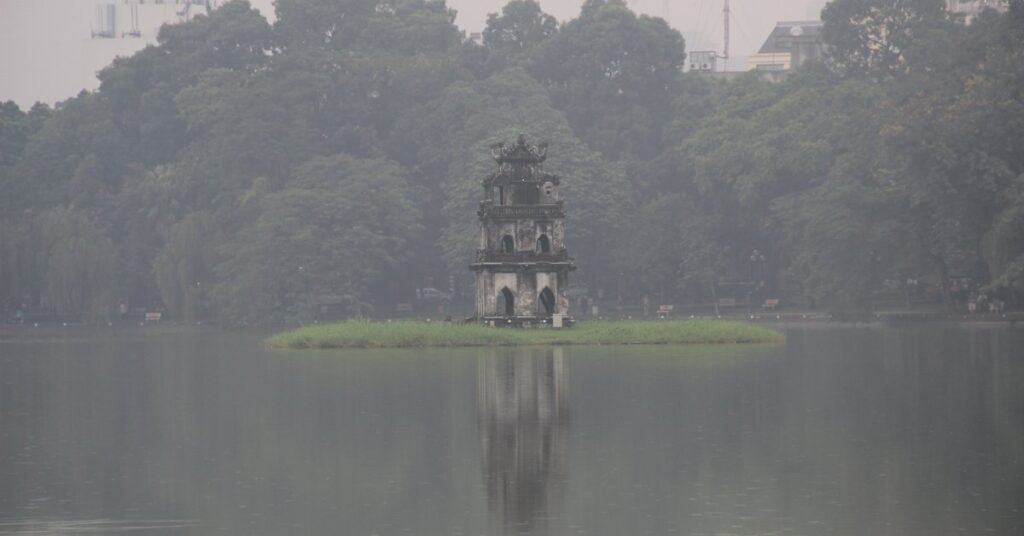
Featured image: The Tortoise Tower in Hoàn Kiếm Lake, Hanoi, on November 28, 2012. Photo: Gary Todd, CC0, via Wikimedia Commons (cropped).